April 18, 2026
The economic landscape of Florida in 2026 is a study in resilience and strategic growth. While much of the nation has grappled with stabilizing after a period of high interest rates and shifting labor markets, Florida continues to outpace national averages in GDP growth, population migration, and business formation. For entrepreneurs and investors, the primary question has shifted from “where is the growth?” to “where are the margins?”
In a state with no personal income tax and a business-friendly regulatory environment, top-line revenue is often impressive.
However, the true measure of success in the current climate is the net profit margin—what remains after the rising costs of labor, materials, and insurance are settled.
As we move deeper into 2026, several sectors have emerged as the clear frontrunners for profitability.
The Professional and Financial Services Sector
Topping the list of high-margin opportunities are professional and financial services. Unlike businesses that require significant inventory or heavy machinery, services rely primarily on intellectual capital. In Florida’s 2026 economy, the demand for specialized knowledge has reached a fever pitch.
1. Asset Management and Financial Consulting
With the influx of high-net-worth individuals relocating from the Northeast and Midwest, asset management has become one of Florida’s most lucrative industries. Recent data shows that firms in the investment and asset management space are seeing net profit margins upwards of 20% to 30%.
The “Miami-Palm Beach-Tampa” corridor has effectively become a secondary financial capital of the United States. These firms benefit from low overhead relative to their fees, especially as digital-first operations reduce the need for palatial physical offices. For boutique firms specializing in tax optimization for new Florida residents, the margins are even tighter—and the profits higher.
2. Specialized Business Consulting
As Florida-based startups and relocated corporations scale, the need for management, marketing, and IT consulting has surged. Specialized consultants—particularly those focused on AI implementation, cybersecurity, and supply chain optimization—are commanding premium rates. Because these businesses can operate with minimal physical infrastructure, their gross margins often exceed 40%, making them some of the most efficient wealth-generation engines in the state.
The Evolution of Florida Real Estate
Real estate remains the backbone of the Florida economy, but the high-margin winners of 2026 are not necessarily the traditional homebuilders. Instead, the highest returns are found in management and specialized development.
3. Property Management and Short-Term Rentals
Florida’s tourism sector has hit record highs in 2026, bolstered by international events and a robust domestic travel market. This has created a massive opportunity for property management companies. By managing portfolios of short-term rentals (STRs) for out-of-state owners, management firms can see net margins of 15% to 25% without the capital risk of owning the underlying real estate.
The most profitable niche within this space is “luxury management,” where companies offer concierge-level services for high-end beachfront properties. These firms charge premium percentages of the booking fee, which, when combined with ancillary service fees (private chefs, boat charters), results in exceptional bottom-line performance.
4. Real Estate Investment Trusts (REITs)
For those looking for passive or corporate-level margins, Florida-focused REITs—particularly those in the industrial and medical office space—are reporting net margins between 12% and 20%. As the state’s population grows, the demand for logistics hubs (warehousing for e-commerce) and outpatient medical facilities has outpaced new construction, allowing existing owners to command higher rents with stable operating costs.
Healthcare and Senior Services
Florida’s demographic profile is its destiny. The state remains the primary destination for retirees, but the “Class of 2026” retirees are wealthier and more tech-savvy than previous generations. This shift has birthed high-margin sub-sectors within healthcare.
5. Specialized Senior Concierge and Private Nursing
Traditional assisted living facilities face high labor and insurance costs, which can squeeze margins. However, private “concierge” senior services—which provide high-end, in-home care and lifestyle management—operate on a much more profitable model. These businesses avoid the massive capital expenditures of real estate and the regulatory burdens of large-scale facilities. By charging high monthly retainers for personalized care, net margins can reach 20% or more.
6. Health Technology and Medical Devices
With the rise of the “Silicon Coast,” Florida has become a hub for medical device manufacturing and health-tech startups. Companies that develop proprietary software for patient monitoring or specialized surgical tools benefit from the “scale once, sell many” model of technology. While R&D costs are high initially, the long-term net profit margins for successful medical technology firms in Florida are currently averaging around 15% to 18%.
Technology and Digital Services
The myth that Florida is only a “tourism and oranges” economy has been thoroughly debunked by 2026. The technology sector is now a primary driver of the state’s wealth, particularly in software and digital infrastructure.
7. Software as a Service (SaaS)
SaaS companies based in Florida enjoy the double benefit of a lower-cost talent pool (compared to San Francisco or New York) and the absence of state income tax for their founders and employees. In 2026, specialized SaaS firms—those catering to the real estate, hospitality, or legal sectors—are seeing gross margins as high as 70% to 80%. Once the initial software is developed, the cost of adding a new customer is negligible, leading to explosive net profit growth as the company scales.
Luxury Tourism and Niche Retail
While the general retail and restaurant industries often struggle with thin margins (typically 3% to 6%), the luxury and niche markets in Florida are a different story.
8. Luxury Charters and Experience-Based Tourism
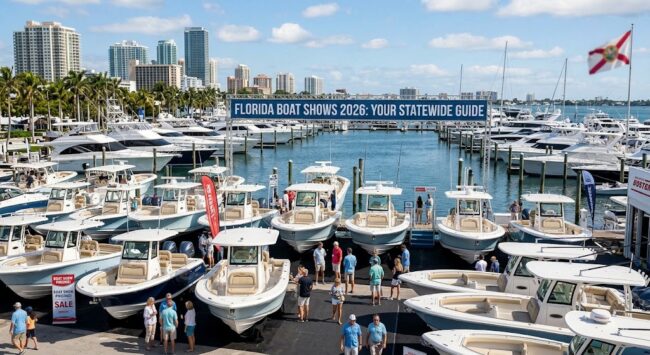
In cities like Naples, Fort Lauderdale, and Miami, the luxury yacht charter and private aviation industries are booming. These businesses operate on a high-ticket, high-margin model. A single week-long yacht charter can net a profit equal to months of operation for a standard tourist attraction. By focusing on exclusivity and high-end service, these operators can maintain net margins of 15% to 25%, even after accounting for the substantial maintenance and fuel costs of their vessels.
| Industry Sector | Est. Net Profit Margin (2026) | Primary Driver |
| Asset Management | 20% – 30% | Low overhead; high-net-worth migration. |
| Business Consulting | 15% – 25% | Intellectual capital; low infrastructure costs. |
| SaaS (Specialized) | 15% – 20% | Scalability; zero state income tax benefits. |
| Luxury Property Mgmt | 15% – 25% | High booking fees; service-based revenue. |
| Concierge Health | 18% – 22% | Demographic demand; retainer-based models. |
Navigating the Challenges
It is important to note that “high margin” does not mean “easy.” The Florida market in 2026 presents unique hurdles that can erode profits if not managed carefully.
- Insurance Costs: Property and casualty insurance remains a significant line item for any business with a physical footprint. The most profitable businesses are those that minimize their physical “surface area” or operate in sectors like consulting and software where physical assets are minimal.
- Labor Competition: With a low unemployment rate (projected at 3.5% for Florida in 2026), the war for talent is intense. High-margin businesses are those that can afford to pay premium wages because their revenue-per-employee is significantly higher than average.
- Regulatory Shifts: As the state continues to grow, local regulations—particularly regarding short-term rentals and environmental impact—are in flux. Staying ahead of these changes is a prerequisite for maintaining profitability.
The Bottom Line
For the Florida business owner or investor in 2026, the path to high profitability leads away from “commodity” services and toward specialization. Whether it is managing the wealth of new residents, providing the technology that powers the state’s infrastructure, or offering the luxury experiences that define the Florida lifestyle, the highest margins are found where expertise meets the state’s unique demographic and tax advantages.
Florida’s economy has normalized after the post-pandemic surge, but for those positioned in the right sectors, the opportunity for profit has never been more significant. By focusing on
Beyond service-based sectors, Florida’s industrial landscape offers substantial opportunities in high-tech manufacturing and exploration. This deep dive into Florida’s aerospace economy highlights how the state has become a global leader in commercial space flight and aerospace engineering.
Maintaining high profit margins often requires staying ahead of the curve in operational efficiency through advanced technology. Understanding the impact of Florida marketing and AI integration is essential for businesses looking to automate processes and boost their bottom line.
For firms in the professional services sector, scalability often comes from recognizing Florida’s role as a major international hub. The shift towards a global Florida business economy provides a roadmap for PR and marketing agencies to capture high-value international clients.
Small-scale tech startups in Florida are also proving that lean operations can yield impressive returns. Exploring the latest AI innovations in Florida reveals how localized tech solutions are transforming the efficiency of various business niches.
sectors with low overhead, high scalability, and essential demand, entrepreneurs can ensure that their business is not just growing, but thriving.
About Brian French
Led by a commitment to tech-intelligent curation, Brian French tracks and analyzes the Florida Business News defining Florida's economy. Brian brings an extensive financial background to his analysis, having graduated from the University of South Florida in Finance and serving as a Vice President and Portfolio Manager for Merrill Lynch Private Investors and the Trust Department in St. Petersburg, FL, as well as a Vice President and Trust Investment Officer for SunTrust Bank in Sarasota, FL. His writing blends macroeconomic trends, capital markets, corporate strategy, and modern digital insights for a sophisticated look at Florida's business market.